You may have clicked the link today to see how many things I purged from my home, but the only thing that was purged from me this week was hope.
As I have purged things from my home, the items that remain have become illuminated. These precious things that made the cut somehow feel more valuable, like I want to use them more, or maybe just appreciate their usefulness. Along with that comes the ability to see more clearly the items that I want to eradicate. This has been a slow week for purging stuff, but a lot has happened in my heart.
I tend to compartmentalize, so until I am prepared to actually set aside time to tackle my cupboards, or my hall bathroom, I can only do my best to ignore the items that I know won’t be able to stay. For some, it might be easier to just pull the unwanted items from the cupboard as they see them, but not for me. That seems out of order. It feels like chaos. I need to prepare for the purge, plan for it, and set aside time for it. I need an empty box prepared for the donation pile and a white garbage bag prepared for the trash.
Interestingly, the more I purge physical things from my home, the more illuminated the things I have buried in my heart have become. If I am honest, I don’t really understand it, but I can feel it. Just like my stuff or my processes, I have a tendency to compartmentalize my feelings, like little boxes tucked away in the back closet of my heart. I can have a box filled with bitterness and resentment sitting right next to a box filled with love and adoration, both bearing the same name on the tag. Until I began this journey of a thousand things, I didn’t realize that I was still carrying around some of those boxes, and I don’t think I ever noticed the marking on the side of some of them that reads toxic.
George R.R. Martin said, “I have lived a thousand lives”, and while he was referencing the ability of a book to take you places, sometimes I feel like I, too have lived many lives. The more accurate truth is that I have wandered through the valley of this wilderness for many seasons. Each season has taught me something, but I can’t help feeling that there has been an underlying purpose for the journey that has escaped me, that has been just out of my reach or ability to comprehend. Or maybe I have fully understood since the beginning, but I have been unable to surrender to the process or to face the truths that hurt. Better yet, maybe I am afraid of the truth, and I am doubtful that I am capable of change.
Whatever the case may be internally or spiritually, I am finding myself in familiar territory physically. It has been over four years since I first felt the small twinge of pain in my lower-left abdomen. It would be over a year of doctor visits and countless consultations with Dr. Google before I stumbled across an article on Abdominal Wall Endometriosis (AWE). Another year would pass before I was able to convince a doctor that I needed an MRI to reveal what I knew was inside of my body. By this time, I was in pain more than I wasn’t, and the desire to find relief from the pain caused me to advocate for myself in such a way that frustrated my unbelieving doctors. While endometriosis is almost common, Abdominal Wall Endometriosis is very rare, found in as few as .03% of women who have delivered a child via cesarean. It was after my surgery in July of 2020 that my surgeon told me he was surprised when the results from the pathologist revealed that my claims were accurate. He told me that none of the doctors believed me for any of those two years. He also told me that they all wanted in on the surgery on the off-chance that I wasn’t crazy.
I experienced relief for several months following that surgery but the old familiar twinge of pain returned. I attempted to negate it with medication and lifestyle changes with no success. It has now been more than two years since the disease has infiltrated my abdominal wall again, and recent imaging shows that it is not in just one area, but three locations, forming a small “V” in the lower-left wall of my abdomen. That would explain why this time, the pain is so much greater, covering a much larger area of my mid-section. While I awaited the consultation with the surgeon who performed my first surgery, I began to check my calendar for convenient times to have surgery. I fully expected the follow-up from my imaging to consist of the doctor and I working our schedules to find a date that worked for us both. But to my surprise, the surgeon told me he could not operate, at least not alone. The location and size of these new fluid-filled cysts would make surgery complicated at best and impossible at worst. The reconstruction of my abdomen was serious, and that required a consultation with a general surgeon.
Having waited two months since the MRI to get to the appointment with the general surgeon, and having already suffered for two years on this round of AWE, I was feeling quite desperate to be relieved of the pain. I pulled into the medical complex on Wednesday afternoon ready. Ready for answers. Ready to get the bad news of how invasive and difficult the surgery would be. Ready to rearrange my living room so I could work from home while I recovered. Ready to file a hundred tax extensions if that is what it meant to make surgery happen. I wasn’t ready for the surgeon to very bluntly tell me that he didn’t feel like surgery was an option. He said that pain wasn’t a reason to operate, and then condescendingly told me that he wouldn’t even consider surgery unless I dropped a few pounds. I tried to explain that as the pain increased, my level of activity has decreased, and that it is difficult to exercise when you hardly want to breathe. I implored him to look at my chart to see the weight fall off after the first surgery and come back after the AWE returned, but he wasn’t interested in hearing me. With no emotion, this man spoke to me, belittled me, and then walked out of the exam room, holding my hope in his pocket. I gathered my things as I felt the heat rising from my chest, the tears forming in my eyes. I walked out of the exam room, searching for the doors to the lobby. Sensing my pain, the nurse followed me, her kind words floating behind me. Tears began to fall onto my black dress as I walked through the lobby and down the hall towards the exit. I avoided the eyes of the patients walking towards me. I made my way to the parking garage, stepping off of the sidewalk in front of a large SUV. I raised my hand apologetically, never lifting my eyes off of the pavement. Finally, safe inside of my car, I let out the cry that had been welling in my chest. I put my hands over my face, and I sobbed. What did he mean pain isn’t a reason for surgery?
Let me stop for a moment and explain. AWE causes small cysts to form, and they fill with fluid, growing month after month. These cysts are located inside of my abdomen – inside of the muscle tissue. Because of their location, anytime I engage my abdomen, there is pain. On a scale of 1-10, the pain ranges from a 3 while I am in a resting position to a 10 when I sneeze. Most of my day is spent somewhere in the 7 range. Breathing hurts. Laughing hurts. Ironically, crying hurts. Every part of every day is covered with pain. Sleep refuses to come, and when it does come, it is interrupted each time I move. This is my life for about 24 days of every month, and that number has steadily increased over time and will eventually be a constant. Most mornings, I wake up, and before my eyes are open, I quietly whisper, “I can’t do this.” I don’t say it loud enough for anyone to hear, but somehow I am hopeful that Jesus hears. I struggle with asking for help, so this statement isn’t really asking for anything, but merely a reminder that I am still suffering. Every now and again, on particularly painful mornings, I plead for God to help. I beg Him to take this pain from me, usually while I wrestle with my blankets, beating the air, screaming silently in my agony.
My reality is constant, chronic pain. And the only hope I had just walked out of the exam room, unconcerned.
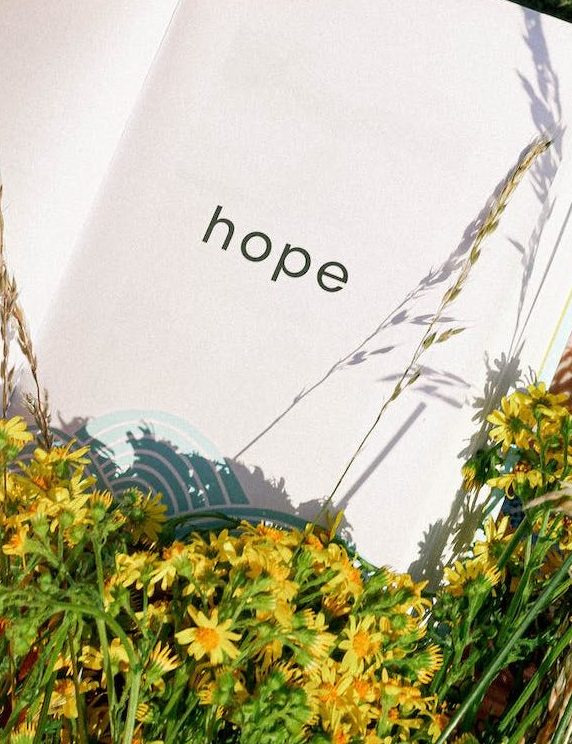
Merriam-Webster states that hope is “to cherish a desire with anticipation: to want something to happen or be true.” That is the kind of hope the surgeon can take from you. It wasn’t the surgery that I anticipated, and it wasn’t even the removal of the disease from my body that I wanted to happen, it is relief from the suffering that I long for. As I read further in the dictionary (yes, I am a nerd!), I realized that this definition is listed under the heading “intransitive verb”, meaning that it is a verb that cannot have an object. This type of hope is simply a feeling, a desire, but it isn’t tangible, and it cannot therefore be obtained. The definitions listed under the heading “transitive verb” read: “to desire with expectation of obtainment or fulfillment; to expect with confidence: TRUST.” This definition reminded me of Hebrews 11:1, ” Now faith is the substance of things hoped for, the evidence of things not seen.” In full nerd status, I looked up the words hoped and substance in the Blue Letter Bible app, and I was a little bit surprised to see that substance here can translate to foundation. Hoped means to hopefully trust. This popular text just came alive to me. Faith is the foundation of things hopefully trusted in. I have been holding onto a feeling of hope, one with no substance, no expectation, one that cannot be achieved.
So this week, I am purging hope in its intransitive form. My hope can not rest in surgeons, and it can not lie in the desire to merely be free from suffering. I have been freed from bondage, I have wandered many seasons through the wilderness, and I have become satisfied with freedom. Freedom from sin, from pain, from temporary sufferings. In the book of Mark, Jesus heals a woman of a disease that she had been suffering from for a long time. She had spent all she had on doctors, on healing remedies, on anything that would offer her hope. But Jesus doesn’t tell her that she will free her from the disease in Mark 5:34. He tells her that her faith has made her whole.
I no longer want to be satisfied with freedom. I want to be whole.

 Uncommonly Common Mom